Evaluasi Kebijakan Pelayanan Rawat Inap dalam Meningkatkan Mutu Pelayanan di RS Prima Husada Sengkang
DOI:
https://doi.org/10.0425/4y25cz60Keywords:
Inpatient Services, Service Quality, Hospital, Health PolicyAbstract
The quality of inpatient services is an important indicator of hospital performance and is strongly influenced by the implementation of service policies. This study aimed to evaluate inpatient service policies in improving service quality at Prima Husada Hospital, Sengkang. A qualitative design with an evaluative approach was employed. Twelve participants were selected using purposive sampling, including hospital management, the head of the service division, inpatient ward heads, staff nurses, and patients or their family members. Data were collected through semi-structured in-depth interviews, observations, and document reviews and were analyzed thematically. Data credibility was ensured through source and method triangulation. The findings identified five main themes: implementation of inpatient service policies, compliance with standard operating procedures, human resources and workload, availability of facilities and infrastructure, and service quality monitoring and evaluation. Policies and standard operating procedures were available and used as service guidelines; however, policy dissemination was not conducted regularly. Staff compliance with standard operating procedures was generally good, although increased patient volume could increase workload and affect service responsiveness. Basic facilities were available, but several facilities required maintenance and improvement. Monitoring was conducted through supervision, meetings, and follow-up on patient complaints. The study concludes that policy implementation has supported service quality improvement; however, stronger policy dissemination, workforce management, facility improvement, and more structured monitoring and evaluation documentation systems are required. Strengthening management commitment and interprofessional coordination is also necessary to ensure consistent, responsive, and patient-centered policy implementation.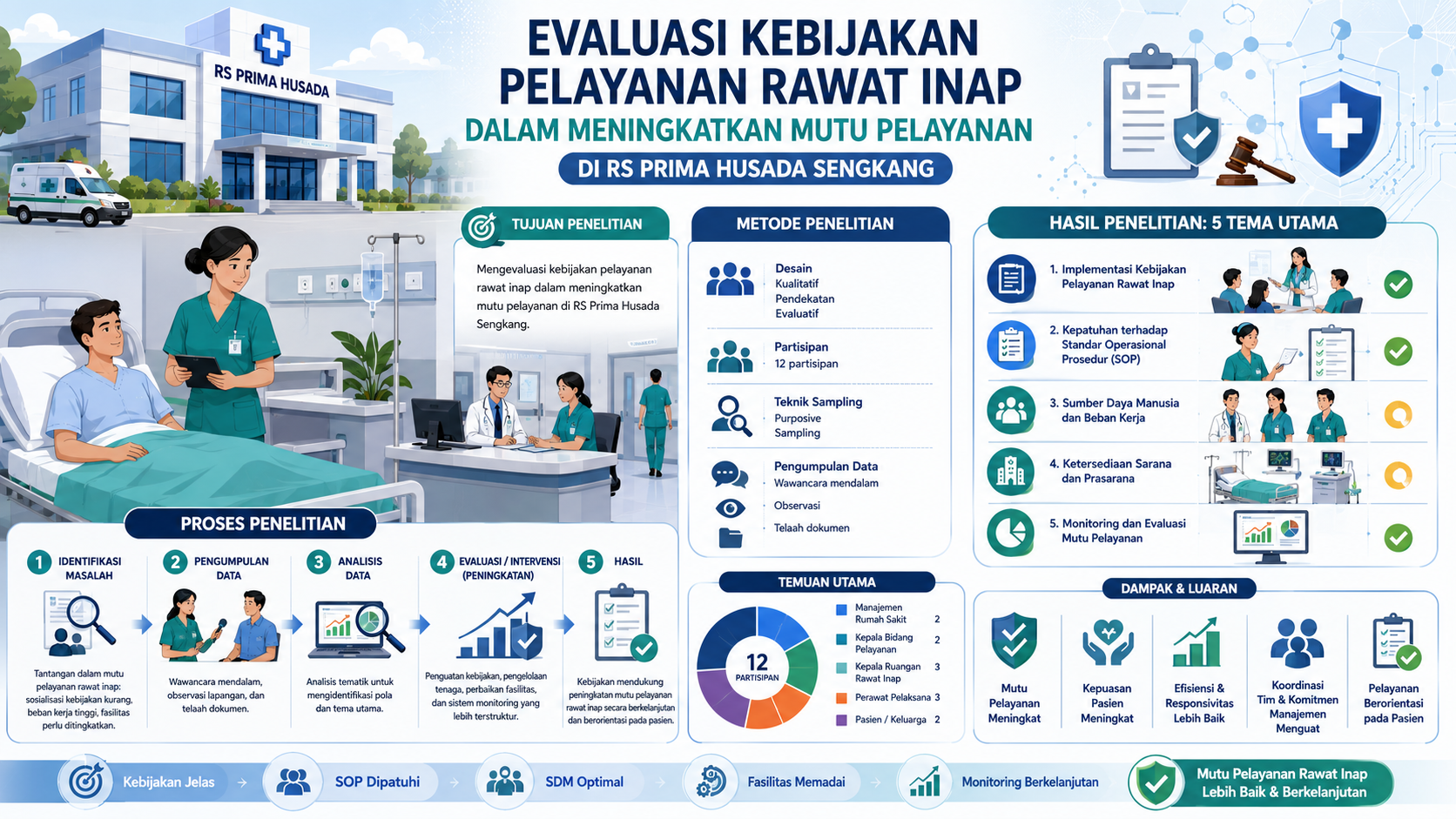
Downloads
Published
2026-06-30
Issue
Section
Articles