Pola Asuh Orang Tua dan Kemampuan Interaksi Sosial Anak Prasekolah: Studi di TK PGRI 1 Keera
DOI:
https://doi.org/10.0425/8dveef41Keywords:
Parenting Style, Social Interaction, Preschool ChildrenAbstract
Social interaction skills are an essential aspect of preschool children's development, as they support children's ability to adapt, communicate, and cooperate with their surroundings. One factor presumed to influence these skills is parenting style. This study aimed to examine the relationship between parenting style and the social interaction skills of preschool children at TK PGRI 1 Keera. This quantitative study employed a descriptive correlational design with a cross-sectional approach. The study population consisted of 58 preschool children, with a sample of 37 respondents selected using probability sampling through proportionate stratified random sampling. Data were collected using a parenting style questionnaire and a children's social interaction skills questionnaire. The relationship between variables was analyzed using Fisher’s Exact Test with a significance level of 0.05. Most parents applied a democratic parenting style (31 respondents; 83.8%). The majority of children demonstrated a moderate level of social interaction skills (30 respondents; 81.1%). Statistical analysis yielded a p-value of 0.117 (p > 0.05), indicating no significant relationship between parenting style and preschool children's social interaction skills. Parenting style was not significantly associated with the social interaction skills of preschool children at TK PGRI 1 Keera. These findings suggest that children's social interaction skills may be influenced by other factors, such as the school environment, peer interactions, and children's daily social experiences.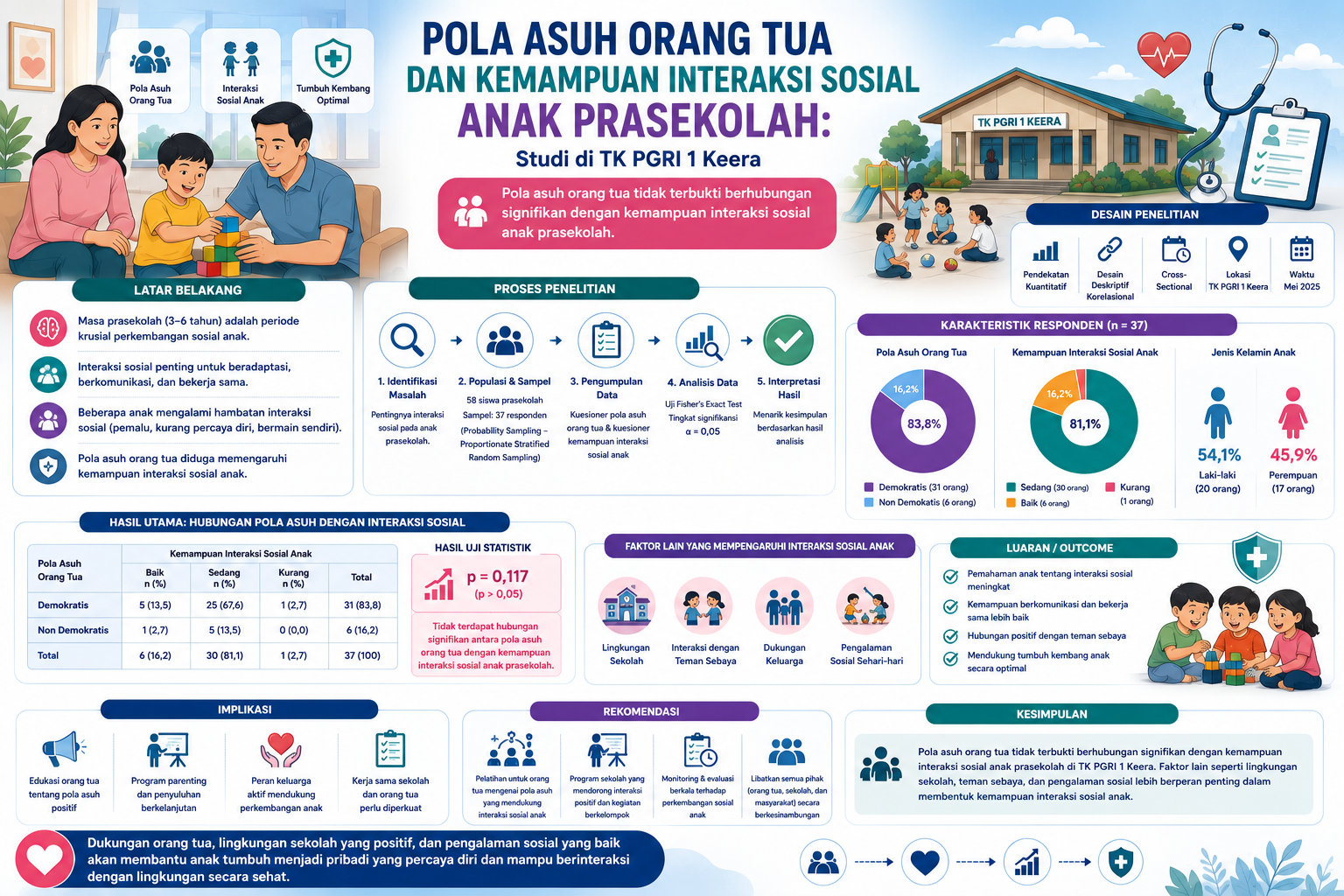
Downloads
Published
2026-06-30
Issue
Section
Articles